“Turning from Idols to God Almighty” by Rev. Joy Matos – October 25, 2026
1. Summary
Rev. Joy Matos’s core message is to guide the congregation toward spiritual clarity. Arriving in Athens, the apostle Paul encountered a city full of idols, including an altar dedicated “to an unknown god.” Speaking to the Areopagus, Paul proclaimed the true God who created the world and gives life and breath to all humanity—a self-sufficient Creator who does not live in man-made temples or require human service. Rev. Matos calls on listeners to identify modern idols in their own lives and turn back to God Almighty, who alone satisfies every human need. This basic summary leads into a detailed breakdown of the sermon’s central themes.
2. Sermon Explainer
Rev. Matos translates the ancient narrative of Acts 17 into practical spiritual applications for modern daily life.
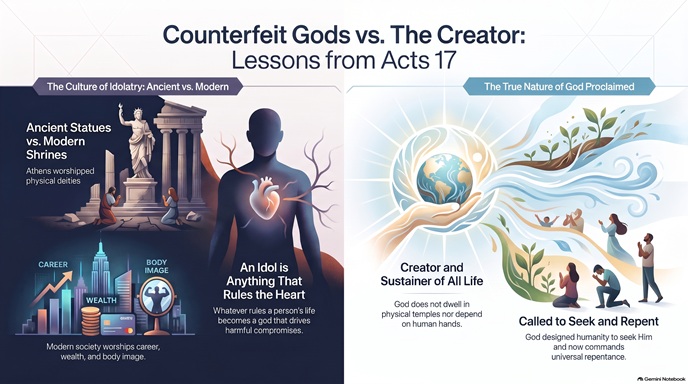
- Ancient Context vs. Modern Idols: Rather than worshipping ancient statues like Athena or Aphrodite, contemporary culture elevates body image, money, and career prestige into modern idols. These forces drive people to distress, compel them to break rules, and cause self-harm or family neglect.
- The Character of God Almighty: Unlike distant, man-made gods, the true Creator is near, generously meets every need, and calls everyone to repent, abandon false gods, and experience true peace.
This thematic framework rests directly upon foundational scripture.
3. Key Matching Scripture Line
Aligning pastoral preaching with foundational scripture ensures that modern application remains anchored in divine truth.
“The God who made the world and everything in it is the Lord of heaven and earth and does not live in temples built by human hands.”
This verse serves as the sermon’s theological anchor because it directly refutes physical and mental idolatry while establishing the supreme, self-sufficient nature of the Creator. A final evaluation illustrates how this biblical foundation was communicated.
4. Sermon Reflection & Assessment
Evaluating homiletical delivery highlights how effectively biblical narrative reaches a contemporary audience. Rev. Matos successfully bridges Paul’s historical Areopagus address with practical, vulnerable insights—notably her honest admission as a “numbers person” confronting month-end financial anxieties and her human tendency to reclaim stress from God when answers seem slow. Her sermon convincingly demonstrates that trusting the living, self-sufficient God frees believers from the heavy burdens of modern idolatry.